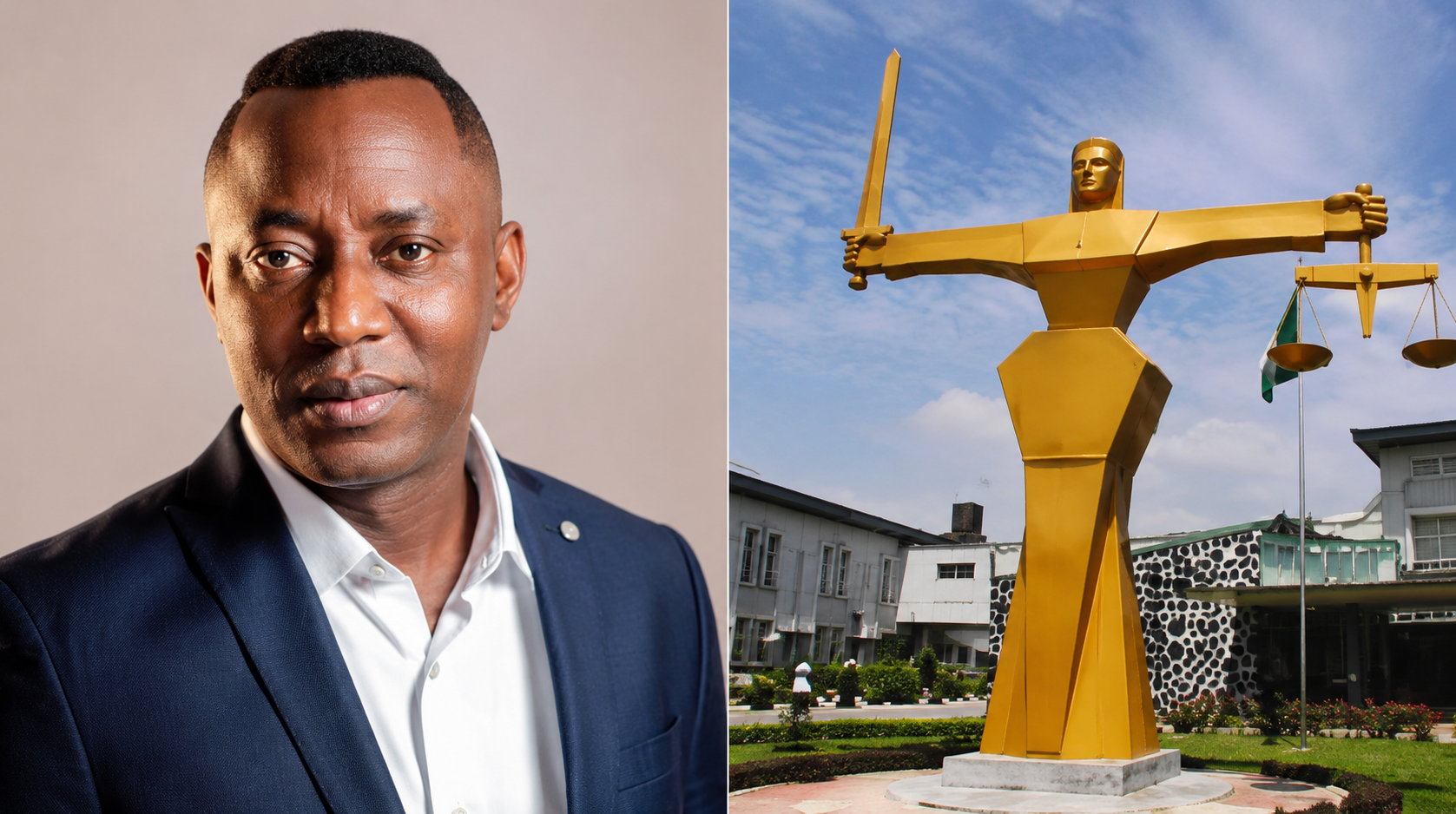
A Nigerian court has revoked the bail granted to activist and former presidential candidate Omoyele Sowore following his failure to appear for a scheduled court proceeding in an ongoing trial.
The decision was delivered during a court session in which the presiding judge expressed concern over Sowore's absence despite previous directives requiring his appearance. The court subsequently ordered that the bail earlier granted to the activist be withdrawn and issued further directives aimed at ensuring his attendance at future proceedings.
According to court records, the case was called for hearing, but Sowore was not present when proceedings commenced. Prosecuting counsel reportedly argued that the defendant's absence constituted a violation of the conditions attached to his bail and urged the court to take appropriate action.
After reviewing submissions from both parties, the court ruled that the failure to appear was sufficient grounds to revoke the bail arrangement. The judge emphasized that individuals granted bail are expected to comply fully with all court orders and attend proceedings whenever required.
Legal representatives for Sowore are understood to have sought leniency, citing circumstances they argued contributed to his absence. However, the court maintained that adherence to judicial processes is essential to the administration of justice.
The development has generated reactions from supporters and critics alike. While some legal observers insist that the court acted within its powers to enforce compliance with bail conditions, others argue that the circumstances surrounding the absence should be carefully examined before further action is taken.
Sowore, a prominent activist and publisher known for his outspoken criticism of government policies, has been involved in several legal battles over the years. His cases have frequently attracted widespread media coverage and sparked debates about civil liberties, political dissent, and the rule of law in Nigeria.
Analysts note that the revocation of bail does not amount to a determination of guilt but represents a procedural step aimed at ensuring that the defendant remains available for trial. They stress that the substantive issues before the court will continue to be determined based on evidence presented by both the prosecution and the defence.
The court is expected to announce the next steps in the proceedings, including arrangements for Sowore's appearance and the continuation of the trial. Legal experts say the outcome of the case could have broader implications for discussions surrounding judicial accountability and compliance with court orders.
As the matter progresses, attention will remain focused on the courtroom, where both sides are expected to continue presenting their arguments in accordance with the law.