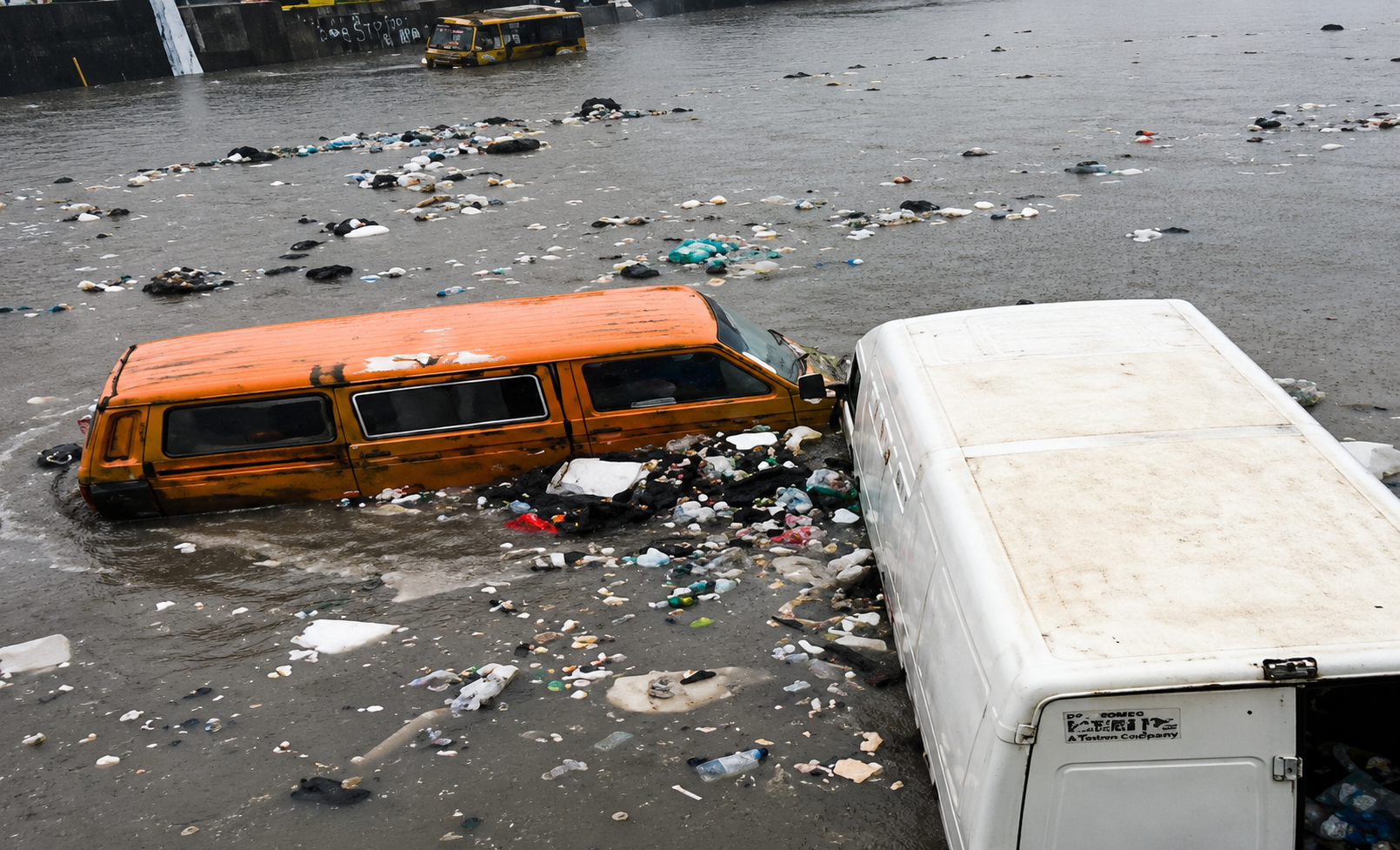
Thousands of residents across Lagos are counting the cost of devastating floods that swept through several communities after days of heavy rainfall, leaving homes submerged, businesses disrupted, and property worth millions of naira destroyed.
The flooding affected major roads and low-lying neighbourhoods, trapping commuters, damaging vehicles, and forcing many families to abandon their homes. Markets, shops, and small businesses also suffered heavy losses as floodwaters destroyed goods and equipment.
Residents described the situation as one of the worst in recent years, saying the floods came with little warning and rose rapidly, making it difficult to salvage belongings. Many called on authorities to improve drainage systems and enforce environmental regulations to prevent blocked waterways.
The Lagos State Government expressed sympathy with affected residents while reiterating its warnings against indiscriminate dumping of refuse into drainage channels. Officials maintained that flooding remains a recurring challenge in the coastal state, particularly during the peak of the rainy season, and urged residents in flood-prone areas to remain vigilant.
Emergency response teams were deployed to monitor affected locations, assist stranded residents, and clear blocked drains where possible. Authorities also advised motorists to avoid flooded roads and urged the public to report emergencies through designated channels.
Environmental experts say rapid urbanisation, poor waste disposal, and inadequate drainage infrastructure continue to worsen flooding in Lagos. They stressed that long-term investments in flood-control projects, improved drainage networks, and public compliance with environmental sanitation measures are essential to reducing future disasters.
As affected communities begin the difficult task of rebuilding, many residents are appealing for government assistance and stronger preventive measures to protect lives and livelihoods from recurring floods.