
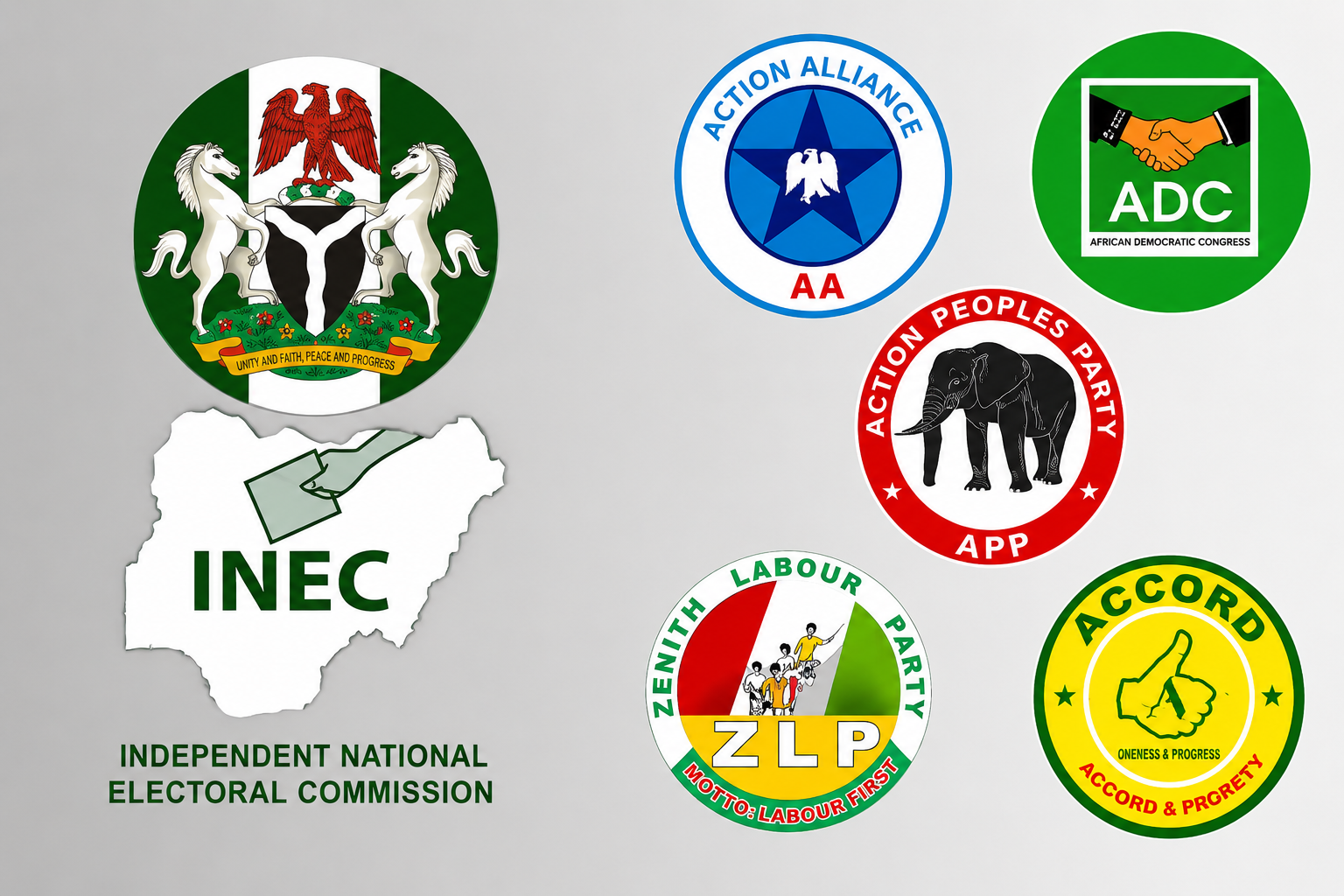
A Federal High Court in Abuja has ordered the Independent National Electoral Commission (INEC) to deregister five political parties, a decision that could significantly reshape Nigeria’s political landscape ahead of future elections. The ruling affects the African Democratic Congress (ADC), Action Peoples Party (APP), Action Alliance (AA), Accord Party (AP), and Zenith Labour Party (ZLP).
Justice Peter Lifu, who delivered the judgment, held that the affected parties failed to meet the constitutional requirements necessary to maintain their registration as political parties in Nigeria. According to the court, political parties are expected to demonstrate a minimum level of electoral performance, including winning elective positions or securing a stipulated percentage of votes in elections.
The suit leading to the judgment was filed by the Incorporated Trustees of the National Forum of Former Legislators. The plaintiffs argued that the continued recognition of parties that failed to satisfy constitutional thresholds undermines electoral integrity and places unnecessary burdens on the electoral system. They maintained that INEC has a constitutional obligation to deregister parties that do not meet the prescribed standards.
In addition to ordering their deregistration, the court reportedly directed that the affected parties should not participate in future elections, including preparations for the 2027 general elections. The judgment has sparked widespread debate among political stakeholders, with supporters describing it as a step toward streamlining Nigeria’s party system, while critics argue it could limit political diversity and democratic participation.
The decision is particularly significant for the ADC, one of the country's prominent opposition platforms. Party officials have rejected the ruling and indicated their intention to challenge it through the appellate courts. ADC spokesperson Bolaji Abdullahi described the judgment as a threat to democratic principles and vowed that the party would pursue all available legal remedies.
The ruling also revives discussions about political party regulation in Nigeria. INEC has previously deregistered dozens of parties that failed to meet constitutional and electoral requirements, a practice that has been upheld by the Supreme Court in earlier cases. Supporters of deregistration argue that it reduces ballot congestion and strengthens the electoral process, while opponents contend that it may restrict political competition and representation.
As legal challenges are expected to follow, political observers will be closely watching how INEC responds to the court order and whether the affected parties can secure relief through the appeals process. The outcome could have far-reaching implications for Nigeria’s multiparty democracy and the configuration of political forces ahead of the next electoral cycle